by PAUL BYERLY | Apr 23, 2026 | Needs, ThePast
Podcast: https://bit.ly/48cxHre
Yesterday I mentioned trying to fill a need with something other than what we need. The example I showed in the image was of a man standing next to a barrel labelled ‘love’. The barrel was overflowing as his wife added more to it from a bucket labelled “respect”. The man was complaining he needed more respect.
Love and respect are not the same thing, and while we need both, neither will satisfy the other need. Men have been told they need respect. This is true, but they also need love. If a man feels needing love is weak, he may try to fill his love tank with respect. That will never work, but it can make a mess of his marriage.
Wives do this too. Women are generally more risk-averse than men, and they long for safety and security. But some women have been told seeking this from their husband shows weakness or unhealthy dependence. So she may try to fill that need with something else. Even if her husband gives her what she asks for in great quantities, she will still feel the need for safety and security. She may get frustrated with her husband for not giving her what she needs. But if he’s giving her what she asks for, and she doesn’t ask for what she needs, the fault is not his.
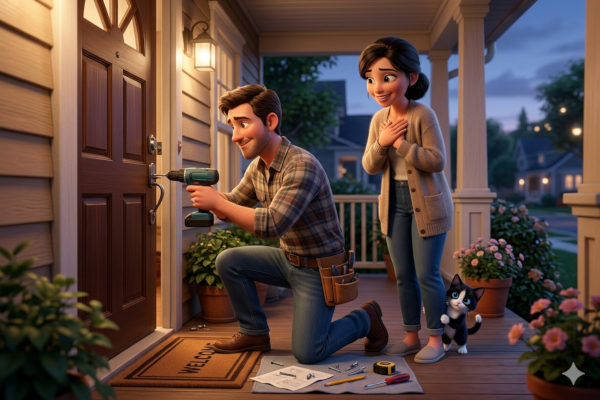
Another way needs go wrong is using our spouse to medicate places that hurt. This is no different than using alcohol, food, or shopping to make ourselves feel better about a part of us that is empty or hurting. Extra words of affirmation or gifts may numb your pain for a while, but it won’t fix a pain that has nothing to do with those things.
Then there’s trying to fix something you lacked in the past by getting a great deal of it now. If your parents didn’t give you the love they should have, you’re hungry for love for a valid reason. But your spouse can’t fill an emptiness that you brought into your marriage. Even worse, you may not be able to feel the love from your spouse because of that emptiness. You are like a black hole, sucking up everything they offer and still feeling empty. You need to address your parents’ failure and heal over that. Then you will be able to feel the love your spouse gives, and your need will be something they can fill.
While the issue often lies within our own self-awareness, it could be your spouse. They may be giving you what they think you need, rather than what you have said you needed. Or they may have misunderstood what you asked for.
If you feel your spouse is not meeting your needs, spend some time praying. What do you really need? Have you clearly asked for that? If you’re getting what you asked for and still feel empty, your need may be different. If your spouse is not giving you what you need, figure out how to clarify your need. If you’ve been clear, and they’re not meeting what you see as valid needs, it’s time for third-party help.
~ This is Paul, and needs look different for every couple.

Tilly watches the world go by from her place of safety.
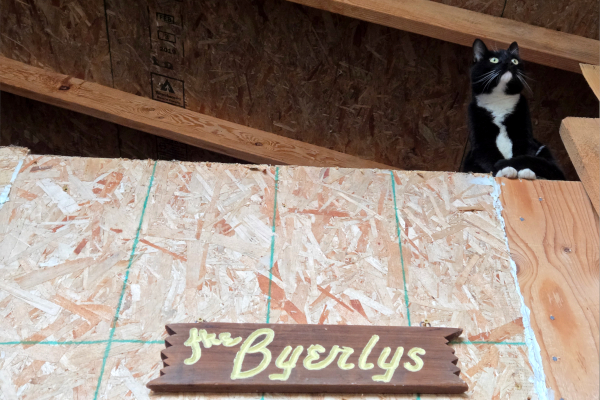
My parents had the sign made shortly after they got married, 67 years ago!
Image Credit: © Paul H Byerly created with ideogram.ai & Paul Byerly
We’re donation supported Thanks for your help!
This post may contain affiliate links, see my disclosure for info.
Image Credit: © Paul H Byerly created with Nano Banana 2 & Paul Byerly
by PAUL BYERLY | Apr 22, 2026 | Needs, ThePast
Podcast: https://bit.ly/3QRWcns
I suggested yesterday that not being honest with ourselves about what we need is a common problem. On the surface it seems like a silly claim. How could we not know what we want? There is actually a lot of evidence supporting my claim.
Those who help people looking for romantic relationships say it’s common for people to claim they want certain things in a partner, but then repeatedly go after someone very different. Those who deal with married couples see people claim to want something, then sabotage getting it. Or do things which invite the opposite of what they say they want.
Part of this is social expectations. We say we need what we think we’re supposed to need. And we tell ourselves we don’t need things we do need because we’ve been told we shouldn’t need that thing. We fear needing something makes us look weak or shows we have problems. So we seek what won’t fill our needs and remain silent about what would fill us. This can lead to trying to get more and more of what’s not working, thinking that will take care of it.

We may deny what we need because we think it’s not appropriate because of our gender. Men who feel they shouldn’t need comfort, or women who feel they shouldn’t need sexual intimacy. We may fear it shows wrong desires. Or perhaps it just exposed us in a way we don’t want to be exposed.
Having been denied what we needed in the past is a common issue. If we don’t ask for what we need, then we can’t be denied. Perhaps your spouse withheld things you asked for in the past, but most of the time when this happens, it goes back to being denied by our caregivers when we were young. Maybe we were belittled, or even punished for asking for what we needed, and we want to avoid that happening again. Recognising these old patterns is the first step toward breaking them.
What do you need from your spouse to feel loved? If you don’t get that, you won’t feel loved. If you don’t ask for it, you probably won’t get it. And if you don’t admit to yourself you need it, you won’t ask for it.
But what if what you need is wrong? Or too much? Then you need to have a hard discussion with your spouse. Is what you want really wrong or too much? If so, what healthy thing would fill that need?
~ This is Paul, and you can’t Do Marriage Well when you feel empty.
We have 13 turkey eggs in the incubator.

We are now letting eggs sit in the nest to see if Chianna will hatch out a brood.
Image Credit: © Paul H Byerly created with Nano Banana 2 & Paul Byerly
We’re donation supported Thanks for your help!
This post may contain affiliate links, see my disclosure for info.
by PAUL BYERLY | Apr 21, 2026 | Needs
Podcast: https://bit.ly/41LcP6M
How are you about asking for what you need from your spouse? I find a lot of folks are very bad at this. Especially when what they need is emotional.
The picture with this post is Widget asking for attention. Tilly asks for attention by putting her paw on us. Whisky comes up and pushes her head under my hand to ask for pets. They know what they want, and they have no problem asking for it. I wish we were all that straightforward!
Recently Lori told me, “I will need extra hugs today.” It was an amazing thing to hear her say that. I felt trusted. I know being able to do that is from recent healing, and it’s still a bit raw. I was all about giving her hugs when I thought about it, and stopping to do it when she asked. Her honesty about her need blessed both of us, and made our marriage better.

I suppose some will say we need to have limits, including knowing the time and place for expressing our needs. While there is truth in that, we often use it as an excuse for hiding needs we should express.
The Bible says, “You have not because you ask not.” I realise people aren’t as good as God about meeting valid needs, but what James said still applies. Lori and I tell husbands and wives that if they didn’t ask for whatever, they were not denied or refused that thing when they didn’t get it. We also tell folks that hinting is not asking. Neither is hedging or tacking on “If you don’t want to, it’s okay“. Asking means saying “I want ______”. Or even better, “I need _____.”
There are a number of reasons we don’t do this.
- We worry about being dependent on others. But God created us to be dependent on others. It’s a feature, not a bug!
- We don’t feel we deserve to receive what we need. I find this at odds with what the Bible says. We are commanded to love and care for each other, so clearly those needs are to be met. What’s more, the Apostle Paul frequently asked for prayer and support from those he wrote to.
- We worry that if others give us what we need, they will gain power over us. This can happen, and it means we need to be wise about who we ask to give to us.
- We think if we receive, we must then give. While it should not be quid pro quo, each of us should both receive and give. If you don’t ask of others because you’re unwilling to give, then you have a selfishness issue.
- We are not honest with ourselves about what we need.
That last one is the biggest roadblock for many. I will deal with it in depth tomorrow.
~ This is Paul, and expressing your needs is actually Doing Marriage Well.
The planting has begun.

Put in almost 300 onions on Saturday. Walla Walla sweet, yellow, and red.
Image Credit: © Paul H Byerly
Shop Amazon
We’re donation supported Thanks for your help!
This post may contain affiliate links, see my disclosure for info.
by PAUL BYERLY | Apr 20, 2026 | concept, Needs
Podcast: https://bit.ly/41MLb9p
It’s been a while since we talked about needs.
Let’s start by defining that word. I’m not talking about what you need to be alive. That list is rather short, and none of us would be happy having only what is on the list. We all desire more than to just exist. We want to live!

If I want to drive to town, I need gas. I live thirty miles from town, so walking is not really an option. If I want to turn a tree into firewood, I need some tools. Just as physical tasks require specific tools, relationships have needs. If I want a good marriage, I must meet various needs, just as my wife must do for me.
Relationships have needs, and when those needs are not met, the relationship suffers. If enough needs are left unmet, the relationship ends.
Let’s also deal with the “All you need is Jesus” idea. It’s a catchy slogan, but the Bible says something different. When Adam was sinless and walked with God, we are told it was not good that he was alone. Adam needed a human partner. God made us social creatures. We have needs that can only be met by other people. And with the exception of a few people God made different, we feel a need for one special person to share our lives with.
Entering into marriage means promising to be that special person for your spouse. It means we work at doing that and sometimes sacrifice to do it. We look for our spouse’s legitimate needs, and we meet them.
Before we move on, ask yourself, “What do I need from my spouse that I am not getting, or not getting in the amount I need?” Also ask yourself where your spouse may feel that way.
~ This is Paul, and meeting your spouse’s needs is part of Doing Marriage Well.
Widget meeting Max, the new pup on the property.

So far she has only got him knee-deep in the pond, but she will keep working on that.
Image Credit: © Paul H Byerly created with Nano Banana 2 & Paul Byerly
Shop Amazon
We’re donation supported Thanks for your help!
This post may contain affiliate links, see my disclosure for info.
by PAUL BYERLY | Apr 17, 2026 | Keeping Sex Good
Podcast: https://bit.ly/4erPm1O
Today’s topic isn’t just an issue for older folks, but it can become a blockade to sex for those over fifty. Let’s talk about “sex drive”.
Modern society has reduced sex drive to a physical urge to have sex. Being “horny” in common terms. But sex drive is far more than what is going on between our legs. It is also what we think and feel. Our emotions and relationship are a big part of it.
Most women, about three-quarters, rarely or never feel a physical sex drive outside of when they are having sex. This is normal for them and doesn’t mean they have no interest in sex. There are women who seek and enjoy sex often despite never feeling a physical push to do so. The way society treats sex may cause these women to worry something is wrong with them. But this responsive desire is perfectly normal.
If you want to have sex with your husband, don’t wait to feel it “down there”. Tell him you want sex, but you will need his help getting your body to want it. Then relax and enjoy.

What about guys? Most young men have a very strong physical drive; so much so they may ignore or be unaware of the other aspects of their sex drives. As they get older, they may need to get in touch with these other aspects. Less physical drive doesn’t mean they have lost interest in sex or their wife; it just means their bodies have changed.
It’s common for men and women to think the penis is a barometer of a man’s sexual desire. But this is wrong. A man can have an erection and zero interest in having sex. Alternatively, a man can very much want sex and not have an erection. Or be able to get one.
I talked earlier this week about ED drugs. These work for most men, but not all. And some can’t take them because of medical issues. A pump will give any man an erection. Some couples find this useful; some do not.
But not being able to get an erection need not be the end of a couple’s sex life. A man does not need an erection to pleasure his wife to orgasm. He can use his hands, his mouth, or a sex toy on her. What’s more, he doesn’t need an erection to have an orgasm. Manual sex will get him there. Oral is generally more effective. A strong vibrator is a very good way. Focus on the underside of the head of the penis.
Erections are nice, but they are not necessary for great sex. Likewise for physical sex drive. If you want to be sexual, you can find a way.
~ This is Paul, and Doing Sex Well looks different in different seasons of life.
This is what eighteen newly hatched chicks look like.

We had a great hatch rate this time. Lori really has it dialed in!
Image Credit: © Paul H Byerly created with ideogram.ai & Paul Byerly
Shop Amazon
We’re donation supported Thanks for your help!
This post may contain affiliate links, see my disclosure for info.
Image Credit: © Paul H Byerly created with Nano Banana 2 & Paul Byerly
by PAUL BYERLY | Apr 16, 2026 | Keeping Sex Good
Podcast: https://bit.ly/4vzmlY7
On Tuesday I discussed some ways age brings about sexual challenges for men. Today, the ladies.
Her intimate tissues need estrogen, and levels of estrogen fall at menopause. This causes tissues to thin, which can make sex uncomfortable. The easy solution is topical estrogen, in the form of creams, rings, or tablets. Your doctor will decide what is best for you.
Topical estrogen has been shown to restore tissue thickness, increase elasticity, improve lubrication, and lower vaginal pH. In addition to reducing or eliminating pain during intercourse, these changes also help prevent recurrent urinary tract infections.
As the estrogen is applied to the genitals, it does not change blood levels significantly. Because of this, it is generally considered safe for women who have had breast and reproductive cancers. Your doctor can tell you more if you are in this category.

Medication is the first step, but sometimes the body needs a little extra help. Without regular intercourse, the post-menopause vagina can atrophy, making intercourse uncomfortable, painful, or impossible. Estrogen will help, but it might take more. Careful stretching will restore the vagina. One way to do this is to have him insert his well-lubricated penis and remain still. Work up to a couple of minutes. If you can’t do this, start with a finger or two. Men, if you do this for your wife, self-control is a must. If you become overly enthusiastic, you risk injuring her and causing her to lose trust. Women, if he does this for you, offer to finish him by hand when he feels the need. And ask him to do the same for you.
If intercourse is not possible, or too uncomfortable, there is an option that Lori and I call ‘pseudocourse’. After foreplay, he lies on his back and lubricates the underside of his penis. He holds his penis up against his body, and she straddles him as if to have intercourse. She presses her genitals against his, then moves her vulva up and down along his penis. This is strongly stimulating for both, and will lead to orgasm for both.
As this method provides clitoral stimulation, she can orgasm even if she never has from penetration. You can control how much stimulation he receives by adjusting the amount of rubbing on the glans of his penis. If she starts near the base, he will enjoy it but won’t quickly climax. More stimulation of the glans will get him to orgasm faster.
~ This is Paul, and there are ways to keep Doing Sex Well.
I love the yellow the willows put on as they get ready to put out leaves!

Image Credit: © Paul H Byerly created with Nano Banana 2 & Paul Byerly
Shop Amazon
We’re donation supported Thanks for your help!
This post may contain affiliate links, see my disclosure for info.


