by PAUL BYERLY | Apr 23, 2026 | Needs, ThePast
Podcast: https://bit.ly/48cxHre
Yesterday I mentioned trying to fill a need with something other than what we need. The example I showed in the image was of a man standing next to a barrel labelled ‘love’. The barrel was overflowing as his wife added more to it from a bucket labelled “respect”. The man was complaining he needed more respect.
Love and respect are not the same thing, and while we need both, neither will satisfy the other need. Men have been told they need respect. This is true, but they also need love. If a man feels needing love is weak, he may try to fill his love tank with respect. That will never work, but it can make a mess of his marriage.
Wives do this too. Women are generally more risk-averse than men, and they long for safety and security. But some women have been told seeking this from their husband shows weakness or unhealthy dependence. So she may try to fill that need with something else. Even if her husband gives her what she asks for in great quantities, she will still feel the need for safety and security. She may get frustrated with her husband for not giving her what she needs. But if he’s giving her what she asks for, and she doesn’t ask for what she needs, the fault is not his.

Another way needs go wrong is using our spouse to medicate places that hurt. This is no different than using alcohol, food, or shopping to make ourselves feel better about a part of us that is empty or hurting. Extra words of affirmation or gifts may numb your pain for a while, but it won’t fix a pain that has nothing to do with those things.
Then there’s trying to fix something you lacked in the past by getting a great deal of it now. If your parents didn’t give you the love they should have, you’re hungry for love for a valid reason. But your spouse can’t fill an emptiness that you brought into your marriage. Even worse, you may not be able to feel the love from your spouse because of that emptiness. You are like a black hole, sucking up everything they offer and still feeling empty. You need to address your parents’ failure and heal over that. Then you will be able to feel the love your spouse gives, and your need will be something they can fill.
While the issue often lies within our own self-awareness, it could be your spouse. They may be giving you what they think you need, rather than what you have said you needed. Or they may have misunderstood what you asked for.
If you feel your spouse is not meeting your needs, spend some time praying. What do you really need? Have you clearly asked for that? If you’re getting what you asked for and still feel empty, your need may be different. If your spouse is not giving you what you need, figure out how to clarify your need. If you’ve been clear, and they’re not meeting what you see as valid needs, it’s time for third-party help.
~ This is Paul, and needs look different for every couple.

Tilly watches the world go by from her place of safety.
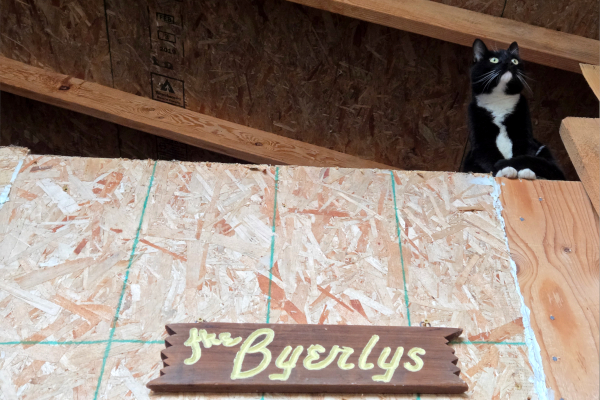
My parents had the sign made shortly after they got married, 67 years ago!
Image Credit: © Paul H Byerly created with ideogram.ai & Paul Byerly
We’re donation supported Thanks for your help!
This post may contain affiliate links, see my disclosure for info.
Image Credit: © Paul H Byerly created with Nano Banana 2 & Paul Byerly
by PAUL BYERLY | Apr 22, 2026 | Needs, ThePast
Podcast: https://bit.ly/3QRWcns
I suggested yesterday that not being honest with ourselves about what we need is a common problem. On the surface it seems like a silly claim. How could we not know what we want? There is actually a lot of evidence supporting my claim.
Those who help people looking for romantic relationships say it’s common for people to claim they want certain things in a partner, but then repeatedly go after someone very different. Those who deal with married couples see people claim to want something, then sabotage getting it. Or do things which invite the opposite of what they say they want.
Part of this is social expectations. We say we need what we think we’re supposed to need. And we tell ourselves we don’t need things we do need because we’ve been told we shouldn’t need that thing. We fear needing something makes us look weak or shows we have problems. So we seek what won’t fill our needs and remain silent about what would fill us. This can lead to trying to get more and more of what’s not working, thinking that will take care of it.

We may deny what we need because we think it’s not appropriate because of our gender. Men who feel they shouldn’t need comfort, or women who feel they shouldn’t need sexual intimacy. We may fear it shows wrong desires. Or perhaps it just exposed us in a way we don’t want to be exposed.
Having been denied what we needed in the past is a common issue. If we don’t ask for what we need, then we can’t be denied. Perhaps your spouse withheld things you asked for in the past, but most of the time when this happens, it goes back to being denied by our caregivers when we were young. Maybe we were belittled, or even punished for asking for what we needed, and we want to avoid that happening again. Recognising these old patterns is the first step toward breaking them.
What do you need from your spouse to feel loved? If you don’t get that, you won’t feel loved. If you don’t ask for it, you probably won’t get it. And if you don’t admit to yourself you need it, you won’t ask for it.
But what if what you need is wrong? Or too much? Then you need to have a hard discussion with your spouse. Is what you want really wrong or too much? If so, what healthy thing would fill that need?
~ This is Paul, and you can’t Do Marriage Well when you feel empty.
We have 13 turkey eggs in the incubator.

We are now letting eggs sit in the nest to see if Chianna will hatch out a brood.
Image Credit: © Paul H Byerly created with Nano Banana 2 & Paul Byerly
We’re donation supported Thanks for your help!
This post may contain affiliate links, see my disclosure for info.
by PAUL BYERLY | Apr 3, 2026 | ThePast
Podcast: https://bit.ly/4ts13Kh
We talked earlier this week about self-image. Our self-image has a massive impact on our sexuality, and it’s a factor in many sexual problems.
Our sexual self-image was largely formed before we knew what sex was. Your parents’ attitudes about sex were communicated to you by their actions and words from birth onwards. Things that happened later in life did shape us some, but for many, the blessing or harm was done long before puberty.
Girls get the good-girl/bad-girl stuff, and good girls don’t want or enjoy sex. They are taught their genitals are dirty. They are told boys can’t control themselves, so they have to fight them off. Boys are taught they are slaves to their hormones, making them sexually selfish and may see their penis as a monster that will hurt their wife if they don’t restrain it.
Most of us have guilt and shame about our sexuality. It could be about something we did in the past. It could be something that was done to us. Many feel some desire they have is wrong.
When we have sex, all of our fear and brokenness are there in bed with us, along with our spouse’s fear and brokenness. There can be so much baggage that sex is all but impossible.

What does God say?
God says your sex organs are good. Very good even! He says what you do with them, in marriage, is a beautiful thing. He urges us to share and explore our sexuality with our spouse and to enjoy doing so a great deal.
Have you ever examined your sexual self-image? How do you see your sexual parts? How do you feel about what you do with those parts? What about the things you don’t like to do? Why don’t you want to do those things? Dig below “Because”; what’s really going on? Where does any of this conflict with what God says?
How might your sex life change if you felt positive about your sexuality? What if you felt sex with your spouse was right and sacred? What if it was okay to really enjoy sex? What if it felt right and intimate rather than dirty or base?
By the way, these things are not just for women. Many men feel guilty about their “high drive” or what they would like to do sexually. Men also feel guilt over sex they know they pushed their wives into in the past. Many men have a love/hate relationship with sex. Such things are as detrimental to sex as her baggage.
Ideally, you and your spouse talk about all of these issues together. Share all of the negative stuff you feel about sex. Talk about where that comes from. Support each other and repeat truth to each other. Then together, walk away from the bad and into the sex life God wants for you.
~ This is Paul, and Doing Sex Well is a process.
Related Resource: Sexual Brokenness and Healing | Dan Allender & Jay Stringer
God’s my favourite artist!

Image Credit: © Paul H Byerly created with ideogram.ai & Paul Byerly
Shop Amazon
We’re donation supported Thanks for your help!
This post may contain affiliate links, see my disclosure for info.
Image Credit: © Paul H Byerly created with Nano Banana 2 & Paul Byerly
by PAUL BYERLY | Apr 2, 2026 | ThePast
Podcast: https://bit.ly/4sa8yEu
One big way our parents’ marriage programmed us is how we communicate.
If your folks screamed at each other, there’s a good chance you do the same and don’t see why that’s a problem. But some folks go the other direction, becoming super sensitive to not only loud but also passionate or energetic conversation.
Differences about this can be a massive marriage issue. She yells naturally, but he feels abused when she does so. He becomes animated, and she feels threatened. They are unable to communicate because one is too busy dealing with feeling disrespected or attacked to hear the words being shared.
The obvious solution is for the louder or more animated spouse to dial it back. But that’s a very difficult thing to do. They communicate as they do because it’s how they were taught to deal with differences since before they can even remember.
Then there’s another issue. Because of what one spouse saw growing up, toxic communication may have become normalised. Examples include:
- Swearing or ugly words.
- Baseless accusations or questioning of integrity.
- Strong sarcasm.
- Dramatic exits, with slamming doors.
- Leaving for hours, with no communication.
- The silent treatment possibly continued until the other caves.
- Withholding affection or sex
- Refusing to do household tasks you both agree are “your job”
- Pushing it even further, there’s destruction of property, which is crossing into abuse.

None of these are designed to facilitate communication. They are not about discussing things; they are about winning by beating the other person down. It’s words as warfare, and all is fair in war.
One particularly bad version of this is the divorce threat. We knew a woman who threatened divorce every time she and her husband got into an argument. Outside of fights she said she didn’t mean it. But it cut him each time she did it – which is probably why she kept doing it.
All of this is about “winning” an argument. But if you win, that means your spouse loses. And if either of you loses, your marriage loses. Each argument you have with your spouse is an opportunity to move closer together. But to achieve that, you have to get rid of your tactics and your desire to win.
The next time you argue, don’t try to win. Honestly express your thoughts and feelings as non-confrontationally as you can. Listen to your spouse, and ask for clarification when you don’t understand. Then work towards understanding and look for a way to move forward that allows you both to feel heard and respected.
~ This is Paul, and both of you winning is Doing Marriage Well.
Related Article: From Toxic Arguments to Constructive Disputes: Ending Dirty Fighting | Ananias Foundation
Three yards of black gold for the gardens!

IImage Credit: © Paul H Byerly created with Nano Banana 2 & Paul Byerly
Shop Amazon
We’re donation supported Thanks for your help!
This post may contain affiliate links, see my disclosure for info.
by PAUL BYERLY | Apr 1, 2026 | ThePast
Podcast: https://bit.ly/3NQNKnA
How you think, what you feel, and how you interact with others, are strongly shaped by how you perceive yourself. Your life, and your marriage, will always rise to, or fall to, match your self-image. Your self-image has a powerful impact on your life, and your childhood shaped your self-image a great deal.
As an adult, have you thought about, or even better, challenged, your self-image? Have you considered how your self-image affects, helps, or hurts your relationship with your spouse?
Early on, our self-image is formed by our caregivers. Parents are a big part of that, but if you spent a lot of time with grandparents or in daycare, those people had a significant impact. As we get older, our social network shapes how we see ourselves, but we tend to look for people who agree with how we see ourselves because that feels comfortable. Even if it’s negative, it feels familiar and safe.
Here’s the thing: all of those people who shaped your self-image were imperfect. At best they tried and fell short. Some were wounded and broken, and some got something out of making you feel bad about yourself.

When you got married, you probably married a man or woman who largely agreed with your self-perception. Perhaps they saw you in a better light than you did, and that attracted you. Sometimes that helps a person see themselves differently, but it can also create tension in the marriage.
One common marriage problem related to a twisted self-image is the inability to receive compliments. If your spouse says something you don’t think is true, why would you accept it? You might also worry they are trying to manipulate you with flattery. I’ve had husbands tell me they are hurt that their wife fights them when they say something nice about her. I suspect some wives have had the same experience.
Given how central your self-image is to your life, it would seem wise to spend more than a little time considering it. Why do you feel as you do about yourself? Can you trace what you feel back to what others said or did when you were young? Do you remember classmates at school labelling you as a nerd or strange, and accepting their judgements?
If you want to challenge your self-image and change it as needed, it will take some intentional effort. Start by writing down how you perceive yourself. Then list things that support those feelings. If you can’t support something with current examples, there’s a good chance that perception is not valid.
The next level is asking people you trust to tell you how they see you. Hopefully your spouse is on this list. Again, ask for supporting evidence. And last, but certainly not least, ask God who He says you are. Some of that may not be who you are now, but rather who He wants you to become.
With all of this information gathered, think and pray. Who are you, really? And who do you want to become?
Then act like the person you want to be. Give yourself grace when you fail. The more you behave as the person you want to be, the more you will become that person.
Do be aware that most folks don’t like change, even when it’s good change. So expect pushback. Give people time to adjust. If some friends keep trying to push you back to who you were, let them know that is not who you are. If they don’t back down, you may have to limit your time with them.
~ This is Paul, and your self-image affects how you Do Marriage.
Related Article: Family of Origin: Patterns and Particularities | The Allender Center
We have turkey eggs!

We will steal half a dozen to incubate, then let her sit on a clutch.
Image Credit: © Paul H Byerly created with ideogram.ai & Paul Byerly
Shop Amazon
We’re donation supported Thanks for your help!
This post may contain affiliate links, see my disclosure for info.
by PAUL BYERLY | Mar 31, 2026 | ThePast
Podcast: https://bit.ly/4bUcT8L
One of the tricky things about dealing with the injury done to us when we were children is we sometimes don’t see how it affected us as being bad. Sometimes we see what it made us as good. And you don’t make an effort to change what you think is good.
One common way this happens is when our young selves figure out our parents were not doing what we needed. Raising a child well requires far more than food, shelter, and education. Children need love, support, encouragement, and praise.
There are a lot of reasons kids get short-changed. Maybe you were raised by a single parent who was doing good to keep the kids clothed and fed. Perhaps one or both parents were addicts. Maybe they never dealt with the ways they were messed up by their parents. Or perhaps they were just selfish.

Regardless of why it happens, when six-year-old Chris or eight-year-old Sam realise they can’t count on their parents, they start taking care of themselves. They don’t bother their parents, seeing it as a waste of time. Out of necessity, they become very adept at looking out for, and caring for, themselves.
As adults, such folks are often proud of how self-sufficient and independent they are. But the reality is these people tend to be isolated or detached, and can suffer from stress, burnout, anxiety, or an inability to ask for help. They hide these things well, but they can’t connect as they should because they don’t trust anyone. This hurts their personal relationships, especially marriage.
God says marriage is two people becoming one. If you’re unable to trust your spouse because of your past, you can’t be one. The spouse of someone who is too self-sufficient can feel unneeded or shut out.
This issue is near and not so dear to my heart because both Lori and I have suffered from it. By the grace of God and a lot of determination, we have let each other in to an amazing degree. But we both still had a streak of self-sufficiency. Recently, God gave us a crash-and-burn event that forced both of us to confront our truth. That has resulted in a huge change for both of us, and it feels wonderful. We’re still finding ways it has changed and freed us that we did not expect.
My only regret is it took us so long to get here! But it takes time; it’s a marathon, not a sprint!
If you are self-sufficient because you realised your parents wouldn’t care for you as they should, you are walking wounded, and your marriage is limited. Please realise what you did was a necessary evil in the past but is not what God wanted for you. Calling it a good thing today is wrong, and you need to face that and heal so you can let your spouse in.
~ This is Paul, and you can’t Do Marriage Well if you’re still trying to do it all yourself!
Related Article: How Your Childhood Can Affect Your Marriage | Gottman
So many seedlings!

Image Credit: © Paul H Byerly created with Nano Banana 2 & Paul Byerly & Paul Byerly
Shop Amazon
We’re donation supported Thanks for your help!
This post may contain affiliate links, see my disclosure for info.


